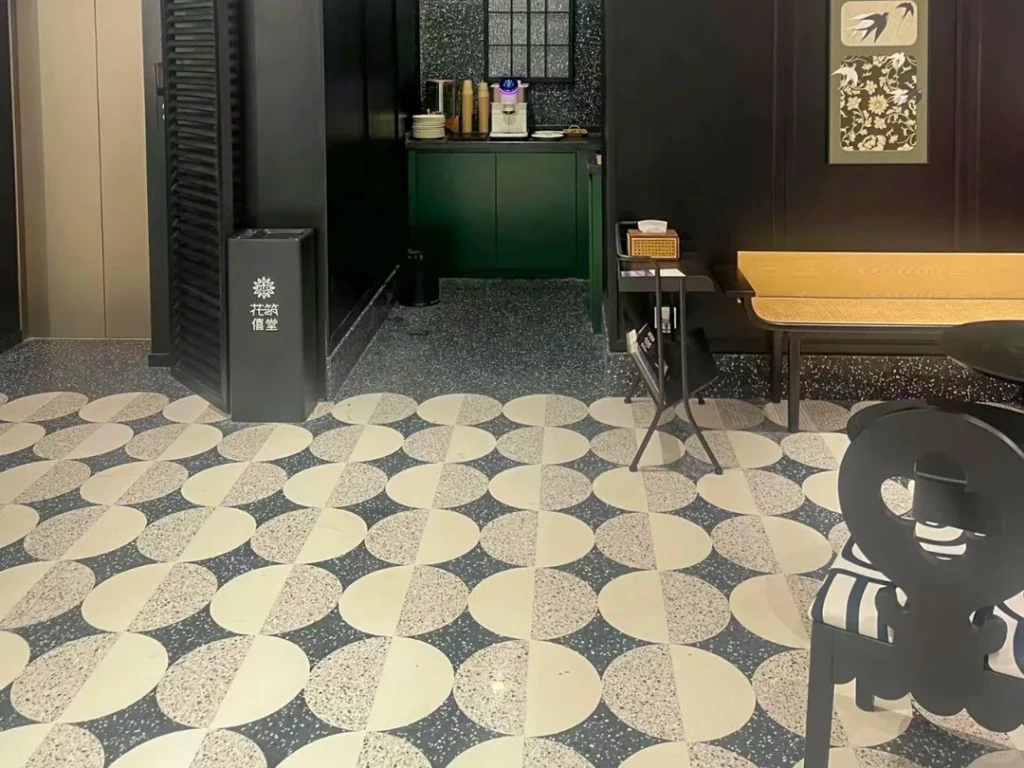
Terrazzo flooring has been around for centuries, evolving from a practical, recycled material used in 15th-century Venice to the versatile, high-performance flooring we know today.
Architects, designers, and property owners all love it for its unique mix of natural aggregates and binders—this combination creates a one-of-a-kind look that balances durability, functionality, and style.
It’s a top pick for commercial spaces, homes, and public buildings alike. But not all terrazzo is the same.
Traditional, Inorganic, and Epoxy terrazzo each have their own unique makeup, performance traits, and best uses. In this guide, we’ll break down their key differences, go over the pros and cons of each, and explain why inorganic terrazzo is becoming the go-to choice for modern, high-demand projects—backed by our factory’s engineering know-how and strict quality control.
What Is Terrazzo Flooring?
At its core, terrazzo is a composite flooring material made by mixing natural aggregates with a binding agent.
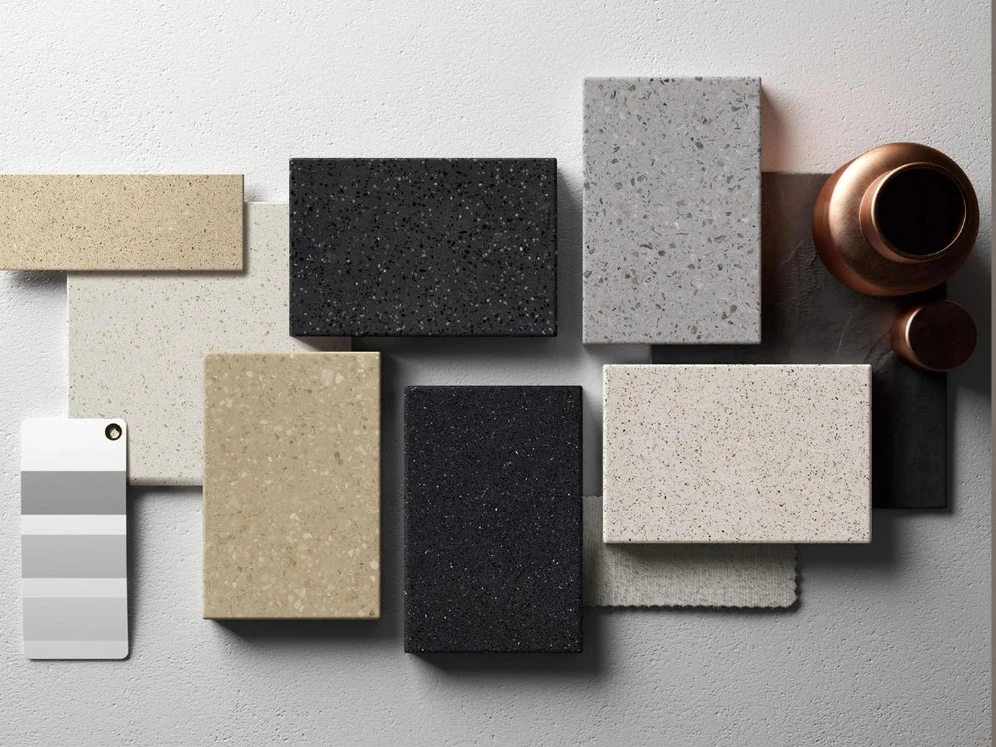
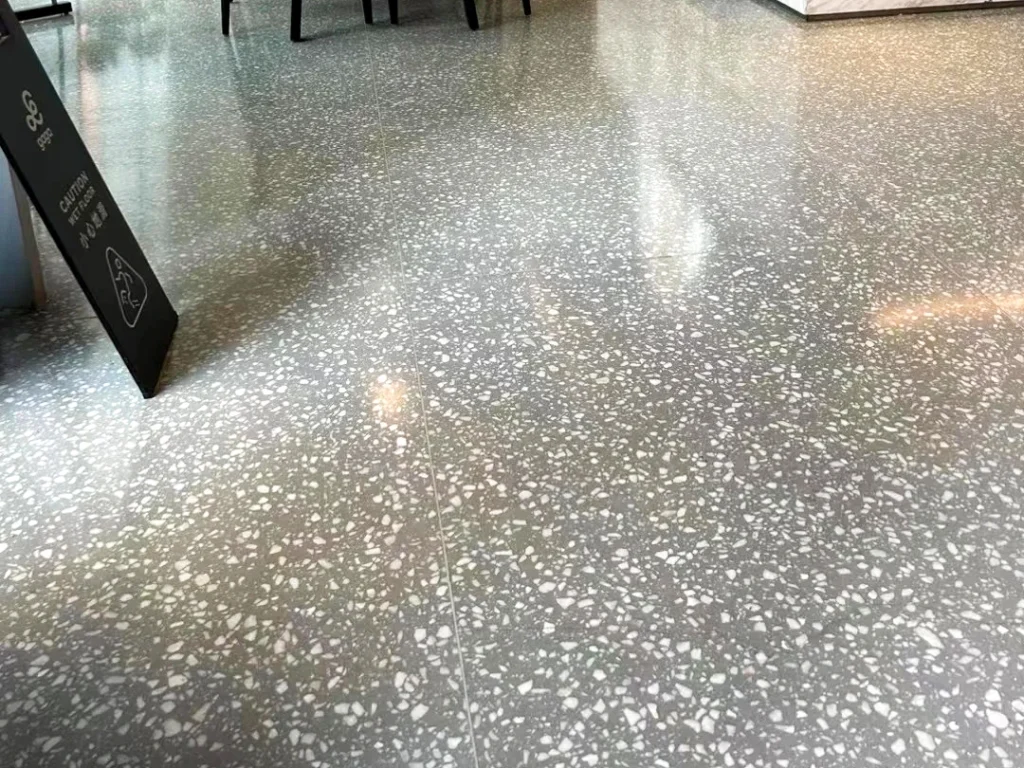
These aggregates can be marble, quartz, granite, glass, or even recycled materials. Once mixed, the material is cured, ground down, and polished to reveal a smooth, speckled finish.
The word “terrazzo” comes from the Italian word for “terrace”—a nod to its original use in Venetian outdoor spaces, where artisans repurposed leftover marble chips to make affordable, long-lasting floors.
Today, terrazzo is incredibly versatile. It can be customized to fit any design vision, from classic neutral tones to bold, vibrant hues, all while delivering reliable, long-term performance.
The main thing that sets different terrazzo systems apart is the binder used. This one component dictates everything—how durable the floor is, how much maintenance it needs, its environmental impact, and even its cost.
The Three Main Terrazzo Systems: Traditional, Inorganic, Epoxy
Below, we’ll break down each type in detail—with a focus on why inorganic terrazzo stands out for most modern projects.
1. Traditional Terrazzo (Cementitious Terrazzo)
Traditional terrazzo—also called cementitious terrazzo—is the original terrazzo system, with a history spanning centuries.
It uses portland cement as the main binder, mixed with natural aggregates and water to create a thick, heavy mixture.
This mixture is poured on-site, left to cure, then polished to a smooth finish. It’s often associated with a classic, timeless look that fits well in historic spaces.
For decades, it’s been a staple in historic buildings, schools, and public spaces.
Key Features of Traditional Terrazzo
Composition: It’s made with portland cement, natural aggregates (like marble, granite, or quartz), and water—no synthetic additives or resins.
Installation: It’s a wet-pour process done on-site, which means it needs a thick cement subfloor to support its weight. The installation is labor-intensive, messy, and takes time. Curing alone takes about 28 days before you can even start polishing, so it’s not a fast process.
Aesthetics: It has a classic, matte to semi-gloss finish with visible aggregates. Color options are limited, though—mostly neutral tones like gray, beige, or off-white, since the cement binder doesn’t take bold pigments well.
Durability: It’s moderately durable, with a Mohs hardness of 5-6. But it’s porous, so it’s prone to staining, water absorption, and cracking if not sealed properly.You’ll need to re-seal it every 1-2 years to keep it in good shape.
Environmental Impact: It uses natural materials, which is a plus, but cement production does emit CO2. On the bright side, it has no VOCs (volatile organic compounds), so it’s a low-emission option.
Cost: Upfront costs are mid-range, usually between $12 and $20 per square foot. But long-term maintenance costs add up because of the regular sealing and potential repairs.
Ideal Use Cases for Traditional Terrazzo
Traditional terrazzo is perfect for historic renovations, heritage buildings, or any space where a classic, timeless aesthetic is the priority.
It’s not the best choice for high-traffic commercial spaces (like airports or malls) or areas prone to moisture (like bathrooms or kitchens) because of its porous nature.
2. Epoxy Terrazzo
Epoxy terrazzo emerged in the 20th century as a modern alternative to traditional terrazzo.
Instead of cement, it uses epoxy resin as the binder. This synthetic binder changed the game by offering more design flexibility, faster installation, and better stain resistance.
But it’s not without tradeoffs—especially when it comes to durability and environmental impact.
Key Features of Epoxy Terrazzo
Composition: It uses a synthetic epoxy resin binder mixed with natural or synthetic aggregates (like marble, glass, or quartz), including recycled materials.
Installation: It’s thinner than traditional terrazzo (1/8 to 1/4 inch thick), so it requires less subfloor preparation. It also cures quickly—usually 7-10 days—cutting down on installation time.This makes it a faster, more convenient option for projects on a tight timeline.
Aesthetics: It’s highly customizable, with unlimited color options—from bold, vibrant hues to subtle tones. It has a glossy finish that really makes the aggregates stand out.
Durability: It’s non-porous, so it resists stains and water well. But it’s less scratch-resistant than traditional or inorganic terrazzo (Mohs hardness of 4-5) and tends to yellow over time with direct UV exposure. That means it’s not suitable for outdoor use.
Environmental Impact: Epoxy is a synthetic material, and some formulations contain VOCs. It’s also harder to recycle than natural terrazzo systems.
Cost: Upfront costs are higher—between $18 and $28 per square foot, which is 20-30% more than traditional terrazzo. But it has lower maintenance costs since it doesn’t need regular sealing.
Ideal Use Cases for Epoxy Terrazzo
Epoxy terrazzo works well for interior commercial spaces—like retail stores, offices, or hotels—where design flexibility and fast installation are key.
It’s not recommended for outdoor spaces, high-traffic industrial areas, or spaces with direct sunlight (because of yellowing).
Inorganic terrazzo is the latest evolution in terrazzo technology. It takes the best parts of traditional and epoxy terrazzo and fixes their limitations.
It uses a high-performance inorganic binder—a specialized cement blend with inorganic additives—that boosts durability, reduces porosity, and keeps the natural, eco-friendly benefits of traditional terrazzo.
Our factory specializes in inorganic terrazzo production, using advanced vacuum vibro-compaction technology to make sure every slab is consistent, dense, and high-quality.
Key Features of Inorganic Terrazzo
Composition: It’s made with a high-strength inorganic binder (a specialized cement blend), natural aggregates (marble, quartz, granite, or recycled glass), and inorganic additives. No synthetic resins or VOCs here.We control every step of the mixing process at our factory to ensure precise aggregate distribution and consistent binder quality—no inconsistencies like you might get with on-site mixing.
Aesthetics: It combines the classic look of traditional terrazzo with the design flexibility of epoxy. You can choose any color (neutral to bold), any aggregate size, and any finish (matte, semi-gloss, polished).The seamless installation option gives it a clean, modern look that works in both commercial and residential spaces.
Durability: It’s far more durable than both traditional and epoxy terrazzo. With a Mohs hardness of 6-7 (close to granite), a compressive strength of 110-116 MPa, and water absorption of just 0.4-0.5%, it’s built to last.It resists stains, scratches, UV damage, and moisture—no regular sealing required. It even holds up outdoors, thanks to its UV resistance.With proper installation and minimal maintenance, it can last 30+ years—often as long as the building itself.
Environmental Impact: It’s 100% inorganic, has zero VOCs, and uses natural, recyclable materials. Our factory uses eco-friendly production processes to reduce waste and carbon emissions.It also has a Class A1 fire rating (non-combustible), making it safe for public spaces, schools, and hospitals.
Cost: Upfront costs are mid-range, between $13 and $22 per square foot—competitive with traditional terrazzo and cheaper than epoxy. And since it needs almost no maintenance, it’s cost-effective in the long run. Our direct production model cuts out middlemen, so you get the best quality at a competitive price—no markup.
Ideal Use Cases for Inorganic Terrazzo
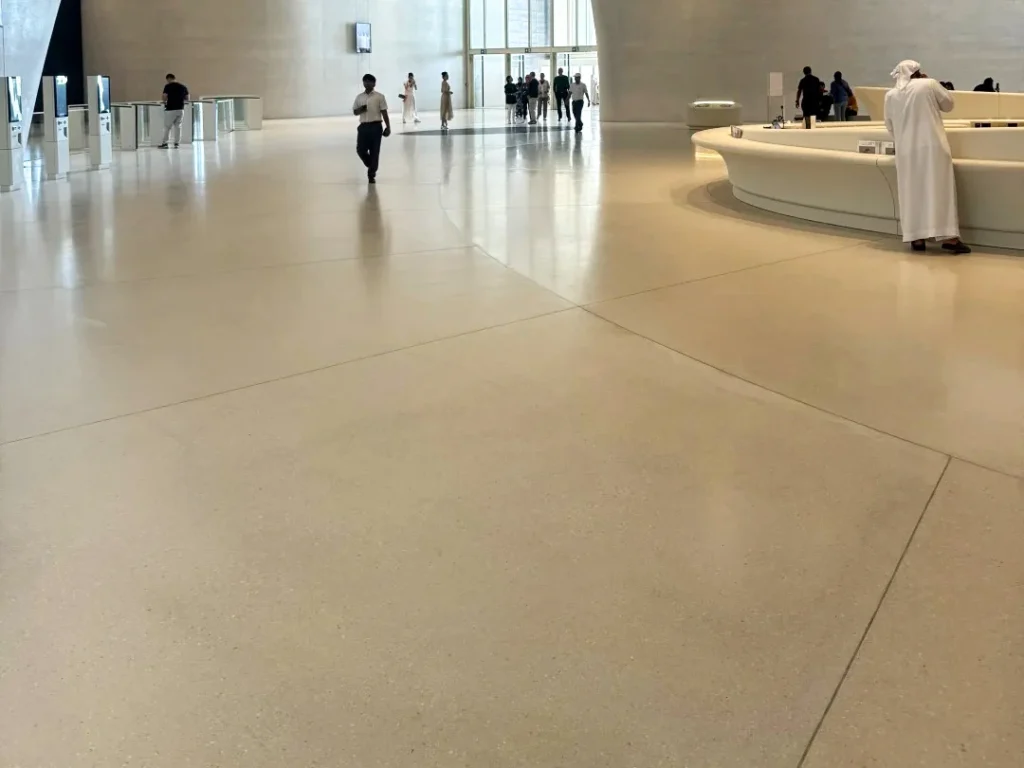
Inorganic terrazzo is the most versatile option. It works for high-traffic commercial spaces (airports, malls, hospitals, schools), residential homes, outdoor areas (patios, walkways), and industrial facilities.
It’s perfect for any project where durability, eco-friendliness, design flexibility, and long-term value are top priorities—that’s exactly the kind of project our factory focuses on.
Traditional vs. Inorganic vs. Epoxy Terrazzo: Side-by-Side Comparison
Why Inorganic Terrazzo Is the Best Choice for Modern Projects
After looking at all three terrazzo systems, it’s clear that inorganic terrazzo hits the sweet spot for most modern projects. It balances durability, design flexibility, eco-friendliness, and cost better than any other option.
And here’s why our factory’s inorganic terrazzo stands out even more:
Factory-Controlled Quality: We use advanced vacuum vibro-compaction technology to make sure every slab has uniform density, consistent color, and top-notch performance. No on-site mixing inconsistencies here—we control every step of the process.From selecting high-quality aggregates to mixing the inorganic binder, we ensure every piece meets our strict standards.
Engineered for Performance: Unlike traditional terrazzo, our inorganic terrazzo is built to resist stains, scratches, moisture, and UV damage. You won’t need to seal it regularly, and it holds up even in high-traffic spaces like airports and hospitals. With a compressive strength of 110-116 MPa and low water absorption, it’s tough enough for even the most demanding projects.
Design Versatility: You get the best of both worlds— the classic, natural look of traditional terrazzo and the unlimited color/aggregate options of epoxy. Whether you want a sleek modern hotel lobby or a warm home floor, we can customize it to your vision.We offer a wide range of aggregates and finishes, so you can create a truly one-of-a-kind floor.
Eco-Friendly & Safe: It’s 100% inorganic, has zero VOCs, and uses recyclable materials. Our eco-friendly production processes reduce waste and carbon emissions, and its Class A1 fire rating makes it safe for public spaces and schools.We even use recycled aggregates like glass to make it more sustainable.
Cost-Effective Long-Term Value: It has a mid-range upfront cost, but since it needs almost no maintenance and lasts 30+ years, it’s the most cost-effective option over time. And our direct production model means you get great quality without middlemen markup.
FAQs About Terrazzo Flooring Systems
Is inorganic terrazzo more expensive than traditional terrazzo?
No—our inorganic terrazzo has a similar upfront cost to traditional terrazzo. But it’s more cost-effective in the long run because it needs minimal maintenance and lasts longer.
Epoxy terrazzo is the most expensive upfront, and traditional terrazzo ends up costing more over time because of regular sealing and repairs.
Can inorganic terrazzo be used outdoors?
Yes! Unlike epoxy terrazzo, which yellows in sunlight, inorganic terrazzo is UV-resistant and moisture-resistant.
It works great for outdoor spaces like patios, walkways, and public plazas, and it can handle harsh weather conditions without fading or damage.
How long does inorganic terrazzo last?
With proper installation and minimal maintenance, our inorganic terrazzo can last 30+ years—often as long as the building itself.
That’s significantly longer than traditional terrazzo (20-25 years) and epoxy terrazzo (15-20 years).
Is inorganic terrazzo easy to clean?
Yes! Its non-porous surface resists stains from coffee, oil, and other common spills.
Most messes can be cleaned with a damp mop and neutral cleaner. You don’t need to seal it regularly or do any special maintenance, which makes it perfect for high-traffic spaces.
Can I customize the color and aggregate of inorganic terrazzo?
Absolutely! We offer unlimited color options—from neutral tones to bold, vibrant hues—and a wide range of aggregates, including marble, quartz, granite, and recycled glass.
We can match any design vision, whether you want a subtle, uniform finish or a bold, artistic pattern.
Final Thoughts: Choosing the Right Terrazzo for Your Project
Terrazzo is a timeless, versatile flooring option, but the right system depends on your project’s needs, budget, and design goals.
Traditional terrazzo is great for historic renovations and classic looks, while epoxy terrazzo works well for interior spaces where design flexibility and fast installation are key.
But for most modern projects—whether you’re designing a high-traffic commercial space, a residential home, or an outdoor area—inorganic terrazzo is the best choice. It offers the perfect balance of durability, design, eco-friendliness, and long-term value.
At our factory, we specialize in engineering high-performance inorganic terrazzo that meets the strictest standards for quality and sustainability. Our factory-controlled production ensures consistent results, and our customization options let you create a floor that’s uniquely yours.
Whether you’re working on an airport terminal, a luxury hotel, or your own home, our inorganic terrazzo is built to last—and impress.
Ready to learn more? Contact us today to discuss your project needs, request a sample, or get a free quote from our team of experts.